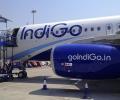
The price of aviation turbine fuel has increased by 50 per cent since January and the situation has adversely impacted IndiGo, its CEO Ronojoy Dutta said on Wednesday. He said the government should bring aviation turbine fuel (ATF) under the Goods and Services Tax (GST) and make flying affordable for consumers and viable for airlines. IndiGo is India's largest airline and with around 55 per cent share in the domestic passenger market.
Airfares in the country are set to rise, with IndiGo on Thursday introducing a fuel charge of up to Rs 1,000 based on a flight's distance, in response to the significant rise in aviation turbine fuel (ATF) prices in the last three months. The Indian aviation sector experiences its peak travel season between October and December. The inclusion of a fuel charge component in airfares is anticipated to have a sizable impact on IndiGo's passengers, according to experts.

In India, domestic airlines have not secured any relief from the government and are reporting 50-55 per cent loads as domestic air travel resumed on May 25 after two-month suspension.

The spot airfares on major routes, where Vistara cancelled flights on Tuesday, have surged by up to 38 per cent, according to data provided by Cleartrip. The spot airfares for Tuesday were compared with March 5. Vistara has cancelled 52 flights on routes such as Delhi-Indore, Delhi-Srinagar, Mumbai-Kochi, and Bengaluru-Udaipur as a certain section of pilots went on sick leave, reportedly protesting against the new salary structure that was introduced as part of the airline's merger with Air India.

The travel agents have demanded refunds for customers
Jet fuel prices on Thursday were hiked by the steepest ever 16 per cent to catapult rates to an all-time high in step with hardening international oil rates.
Airfares on major domestic routes such as Kolkata-Bagdogra, Delhi-Bengaluru, and Delhi-Mumbai have witnessed an increase of up to 12.7 per cent year-on-year (Y-o-Y) in May this year, according to data by Thomas Cook (India) and SOTC Travel. The recent increase in aviation turbine fuel prices, rupee depreciation, reduction of flights by key players, and grounding of planes due to engine supply issues have contributed to the rise in airfares, said aviation industry experts. However, the data also shows that summer airfares on key routes such as Delhi-Leh and Delhi-Kolkata have significantly decreased due to the introduction of new flights.
Airlines sought a limited period concession of the standing rule of slot allocation, which mandates that firms must operate at least 80 per cent of their allocated slots.
Air India, IndiGo, and SpiceJet have suspended flights to China and Hong Kong.

InterGlobe Aviation's promoter Rakesh Gangwal on Monday sold shares worth Rs 6,785 crore of the company through open market transactions. The co-founder of the company, which operates the country's largest airline IndiGo, offloaded 2.25 crore shares of IndiGo amounting to 5.83 per cent stake, according to bulk deal data on BSE.

Days after saying that there is no need for subsidies to achieve greater penetration of electric vehicles (EVs), Union Minister of Road Transport and Highways Nitin Gadkari on Monday clarified that the view is his own, but any official call on EV subsidies is not one that he can take.

As fliers find themselves spoilt for choice, airlines are looking at ways in which to position themselves distinctively.

The issues include not getting refunds on airline and hotel bookings, getting charged a service fee even if airlines have waived cancellation charges and so on. Complaints are piling up on Twitter, Facebook and other social media channels as more and more people cancel their travel plans due to the ongoing Covid-19 pandemic.

Civil Aviation Minister Ashok Gajapathi Raju said the airlines have been responsible in keeping fares reasonable during Chennai and Srinagar floods.

'The first and most basic responsibility of any government is to protect its people from external threats and internal harm.' 'Budget 2025-2026 has to focus on meeting this responsibility,' asserts R Jagannathan.

An airfare regulatory authority likely soon.

At a panel discussion at the Centre for Asia Pacific Aviation's summit in Mumbai on Tuesday, Gopinath also said that airlines should price fares so as to maximise loads.
However, the reduction in ATF prices will provide some cushion to airlines engaged in a protracted price war have lost control over pricing in one the world's most price sensitive domestic markets.

While global majors like JetBlue, RyanAir, Southwest sell almost 90 per cent of their tickets through their own websites or apps, airlines in India have a minuscule share of around 25 per cent through direct channel booking.

Jet fuel prices on Monday were hiked by a steep 5.3 per cent - the tenth straight increase this year -- to an all-time high, in line with a surge in global energy prices. The price of aviation turbine fuel (ATF) -- the fuel that helps aeroplanes fly -- was hiked by Rs 6,188.25 per kilolitre, or 5.29 per cent, to Rs 1,23,039.71 per kl (Rs 123 per litre) in the national capital, according to a price notification of state-owned fuel retailers. This is the 10th straight increase in jet fuel prices this year.

Jet fuel prices on Wednesday were hiked by over 18 per cent -- the steepest ever increase -- to all-time high levels after international oil price surged to a multi-year high.

Several passengers have been complaining on social media as domestic airlines have decided not to give refunds in cash for cancelled flights due to the lockdown and instead issue credit for future travel.

After a quiet April-June quarter in 2024-25 (FY25), the operational and financial performance of India's largest listed hotel company, Indian Hotels Company, clearly rebounded in the July-September quarter (Q2) of FY25. With double-digit growth in the average room rate (ARR) and higher occupancy, the Taj Hotels chain owner reported a 16 per cent revenue increase and a 30 per cent rise in operating profit.

Unlike some US airlines, Indian carriers are not planning to charge services like baggage handling to beef up their bottomlines, which is hit by a steep hike in fuel prices, but would prefer to keep the options open.The issue came to the fore following a decision by American Airline to impose a $25-15 charge for baggage handling, as the US carriers buckled under steep hike in fuel prices.

An exclusive excerpt from The Tatas: How A Family Built A Business And A Nation.

The issue had come up during a presentation by the Civil Aviation Ministry.
Experts say carriers will start making money on higher ticket prices, but jet fuel costs may act as a dampener

Just over a three-hour flight from Delhi, Kazakhstan, Uzbekistan, Azerbaijan and Georgia have seen a big jump in visitors.

Air travel will now become a little expensive as the government has decided to increase the lower limit on airfares by five per cent amid rising aviation turbine fuel (ATF) prices, Civil Aviation Minister Hardeep Singh Puri on Friday. The upper limit on airfares will remain as it is for now. Just a month back, the Centre had increased the lower and upper limits on domestic airfares by 10-30 per cent due to rising ATF prices. While announcing resumption of scheduled domestic flights in May last year, the aviation ministry had placed limits on airfares through seven bands classified on the basis of flight duration.
Airlines have been conducting fuel efficiency analysis, which involves fuel calculations on a daily basis, based on the availability of optimum routes in terms of wind, flight levels and overflying charges, route rationalisation to prune the number of flights and increase utilisation. They also want the Centre to grant ATF a declared goods status, which would result in a uniform levy of 4 per cent sales tax at the state level.
The ministry has also asked that the cap of such borrowings is to be set at $500 million (Rs 3,450 crore) for a single company and $1 billion (Rs 6,900 crore) for the entire sector.
Jet, Kingfisher, SpiceJet in the red during September quarter, despite 20 per cent rise in passenger numbers.
Airline stocks have been soaring following a steep decline in crude oil prices and sustained passenger traffic. Analysts have particularly turned bullish on the stocks of InterGlobe Aviation and SpiceJet. On December 20, shares of InterGlobe Aviation (IndiGo) hit a record high of Rs 3,009 on the BSE, having surged 43.24 per cent year-to-date (YTD).
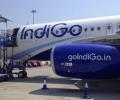
'IndiGo 2018 is a harsh, ultra-lean, mean, zero asset, fighting machine with aspirations of taking on the global long-haul low-cost market.'
"The 'red bag' belonged to one of the hijackers, it contained explosives, and possibly, real passports, too.

The sooner the airlines get their act together, the better.

With fewer passengers airlines bracing for a rise in operating costs due to a spike in crude prices
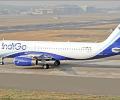
The carriers are scoffing at making the life of their competitors 'easier.
Sending a strong signal to domestic airlines over abrupt hike in airfares by some of them during periods of high demand, the Union civil aviation ministry on Thursday warned them of action if they continued with such 'predatory pricing'.

Domestic traffic fell 7.8 per cent in November.
